London
A walk without purpose
Once a year a hundred people meet at a statue in Jermyn Street and set off deliberately nowhere. Jeremy Clarkson devoted a column to explaining why they are wrong.
Beau Brummell has stood in bronze at the Piccadilly Arcade end of Jermyn Street since 2002. He is a reasonable choice of patron for a walk that refuses to arrive anywhere, having spent his own life demonstrating that how a man carries himself can be a full-time occupation and having died, penniless and unwell, in Caen.
The Grand Flâneur Walk assembles at his feet at midday. The rule, as far as there is one, is that a flâneur walks without purpose or destination. The 2019 walk marked The Chap's hundredth issue and its twentieth year, and drew more than a hundred people in full regalia; at the same hour a second group set off in Düsseldorf, and a third waited in Los Angeles to begin when London finished. The Times photographed it. The caption, which is hard to improve on, called it a celebration of the purposeless stroll.
The following Sunday Jeremy Clarkson gave his column to it. He had seen a group meet in Jermyn Street for what they called a stroll without direction, and he was against it, on the grounds that a walk is not a walk without a pub at the end. He is not entirely wrong. The walk tends to end in a pub.
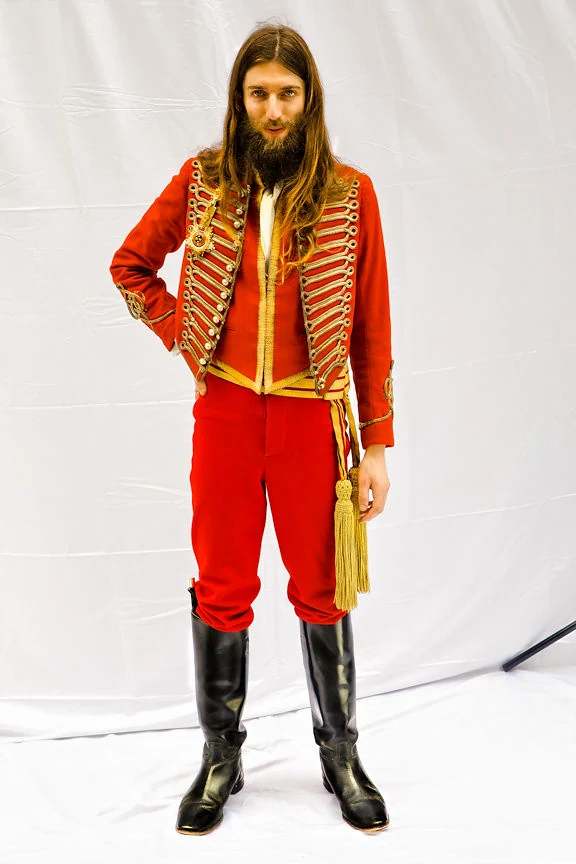
In 2024 the photographer Ian Macaulay shot the participants of the fourth walk against a plain backdrop, in whatever they had turned up in, and hung the results at the Coningsby Gallery in Fitzrovia that September in association with The Chap. A book of the series followed in October. The portraits are the argument for the thing: a hundred people who have each decided, independently and at some personal expense, that a Sunday is worth dressing for.
The walk has run every year since. Clarkson's objection stands unaddressed.
Sources
The Grand Flaneur Walk, The Chap · London Flaneurs, the book · Beau Brummell's statue, ianVisits